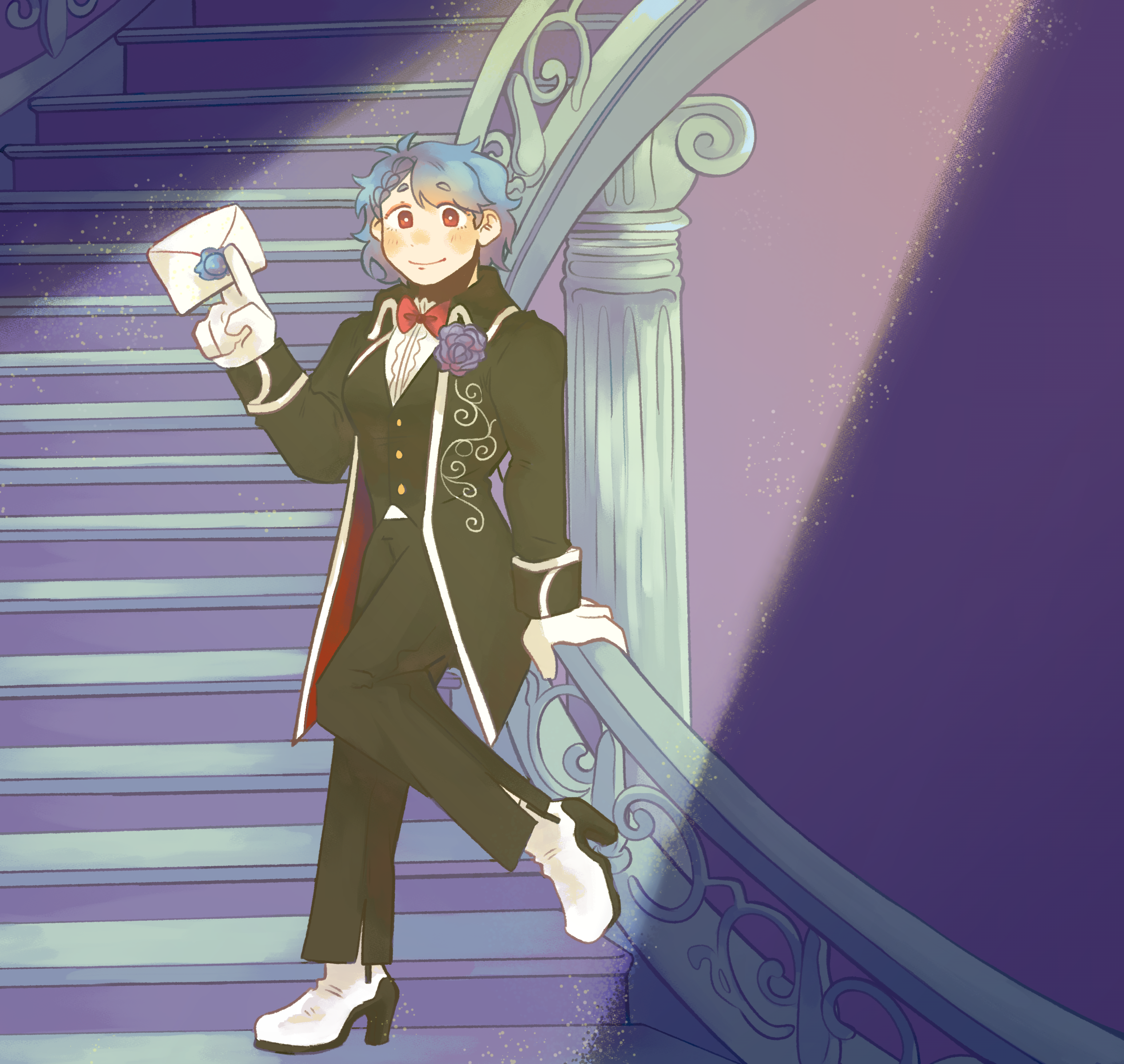
This is not a list of purely the best media I experienced in 2025. No shade to top 10s, it’s a fine form, but I don’t think of my life in terms of lists. I think in themes- in stories. And so as I sit down to write about my favorite media from 2025, I don’t say “what were the 10 best games I played,” I say “what are games that I found the most fascinating, and what do they have in common with each other? What are the narrative threads that tied my year together?”
They’re perhaps unsurprising, written out like this, but these are the four big themes of the media that hooked me in 2025.
Mods

It’s hard to put my finger on why game mods resonate with me so much, often even more than the games they’re modding. Perhaps it’s the simple reality that they are created purely as art, with no need to sell copies. Mods can un-sand corners, add friction, and even be outright offputting. Sure, many address grievances and make games more “playable,” but the best ones instead try to make the experience less broadly appealing. They push a game towards a specific vibe, and say “Hey, this isn’t for everyone. This isn’t for most people. But for some of you out there? This is what you always wished this game could be, if you even dared to dream of it.”
Honorable Mentions
The Drifter for Slay the Spire: My god is Slay the Spire boring to me. I love roguelikes, but I just don’t get it. It’s not even that I don’t enjoy a deckbuilder, I just think this one’s bad??? The only enjoyment I’ve gotten out of the game has been this delightful Initial D mod that has you slaying monsters by drifting. It’s better than the rest of the game put together.
Altria to Artoria for Fate stay/night Remastered: Prestigious and divisive, visual novel developers Type-Moon are no stranger to making unusual choices with the games. The decision to localize the name of a key character as “Altria” instead of “Artoria” in defiance of both common sense and decades of fan acceptance might take the cake, though. Thank you to this modder for fixing it.
My Favorite
Ultimate Marvel vs Capcom 3: Community Edition
The last enemy that shall be destroyed is copyright. The demented minds over at Eighting created a perfect fighting game in Ultimate Marvel vs Capcom 3. Like most perfect things in this world, its perfection is derived from a series of decisions so blatantly bad that the sum total of all the mistakes and overextensions is a mess of a game that is at once disastrous and beautiful. Marvel 3’s balance is terrible. Its code is buggy and obtuse. Its presentation is flashy to the point of incoherence. I love this game, I hate this game. The only thing left to do was keep going.
Of course, this was around the time of Disney’s purchase of Marvel, and any hope of continuation was buried six feet under, and then some. A lackluster sequel was the final nail in the coffin of Marvel vs Capcom, a series I doubt we’ll ever see again beyond rereleases.
Years went by in silence. Modders poked at the game, but largely bounced off: the spirit was willing, but the code was impenetrably obtuse. Cosmetic skins and a few oddity mods like Wackbot is all we’d ever get.
No.
I can’t tell you how exactly it started. Tabs’s Palette Swap, Clone Engine by Gneiss, the works of CaliKing, and so many more- it was a community effort with breakthrough after breakthrough, gradually figuring out ways to force new models, voices, animations, and more into this old, rigid game. Brought back to life.
And with this came the opportunity to add characters that Eighting could’ve never gotten greenlit. Asura from Asura’s Wrath, US Agent from Captain America, Red She-Hulk from She-Hulk, Kyosuke from Rival Schools… and these are the niche picks, you best believe there’s a roster of more natural picks as well. Returning classics from previous games, inventive new designs, mechanics stretching what the game’s engine can do. Long live Ultimate Marvel vs Capcom 3: Community Edition, a mess whose glory a proper game development could never approach.
Swords

Swords have never been the most practical weapon. Even in their era of relevance, spears and bows are the weapons that win battles. I’m not trying to claim that swords were purely ceremonial, mind you- they were and are tools of violence and death, as we are all grimly aware. But what makes them so much more popular as symbols over the weapons that actually won wars?
It’s that they’re romantic, right? More than just a long sharp stick, or stick-throwing implement, a sword is a finely crafted weapon that humans cast their imagination onto. A sword represents adventure, and heroism. And while it’s blessedly been many years since I was fool enough to keep a sword in the house, I am no more resistant to that spirit of adventure than I ever was. At least I’ve sense enough to keep the swordplay contained to my media consumption these days.
Honorable Mentions
The Legend of Sword & Fairy: A wonderfully charming old party-based Chinese RPG with a magical wuxia world and some delightful characters stumbling through it. The fan translation is a bit rough, but I was delighted to be able to experience a hugely influential text that gets ignored in the West.
Dynasty Warriors: Origins: It’s not that the Musou games lost their way- they’ve been fun. But the most fundamental core of hitting attack hasn’t felt like it should since the PS2. DWO rights the ship, and then lets the series’ brilliant core design take it from there.
My Favorite
Rise of the Ronin
Team Ninja has had a hard time of it. When Tomonobu Itagaki left Koei Tecmo in 2008, the studio he left behind felt rudderless. They had two big series on their hands: Dead or Alive, a fighting game with surprisingly engaging mechanics overshadowed by a crude obsession with T&A, and Ninja Gaiden, a reboot “series” with two games to its name, one an all-time classic, and one a brilliant mess. Their attempts to continue Ninja Gaiden only showed how much they were missing Itagaki’s vision, and their Dead or Alive efforts were surprisingly good, but unable to escape their reputation as more softcore pornography than serious game… not that they tried very hard.
It wasn’t until Nioh in 2017 that they finally found their footing, delivering a soulslike that feels good as hell to this day, from the combos and boss fights to the tight tuning of a single sword stroke. The series hasn’t wavered from that impeccable gamefeel ever since, and a handful of years ago they even delivered surprise classic Stranger of Paradise: Final Fantasy Origin on behalf of Square Enix. They knew how to make combat feel real, real good.
After mastering the feel of swinging a blade, what was the next step for these devs? Giving attacks complex relationships to each other. Jigen-ryu’s “first strike” swordsmanship beats Tatsumi-ryu’s quick draw beats the forceful, deliberate attacks of Mugai-ryu, but the shinobi style Gikei-ryu escapes this cycle entirely and has its own strengths and weaknesses. Once sword strikes feel good, we work on the context for said sword strikes. That decision is what made Rise of the Ronin the most fun game to play in 2025.
Anime
I have enjoyed anime for decades, since before we started Scanline, but it is nevertheless true that Scanline’s anime coverage began as a marriage of convenience over passion. When we decided to make the Patreon more than just a tip jar sitting in the corner, we wanted a weekly podcast to go with it. The show needed a broad but clear premise that could run in perpetuity, without being too heavy a prep load. Anime seemed tenable in a way our primary interest, games, did not. Four hundred something episodes later, it might be survivorship bias but it feels like we made the right call.
Honorable Mentions
They Were Eleven: Do not give in to astonishment, because if you do, you might miss just how much more there is beyond the spectacle. Absolutely, the moment you hit play on They Were Eleven, you’re dazzled by its gorgeous animation, art direction, and music. But keep your eyes fully open, because there’s some really wonderful storytelling inside too.
Apothecary Diaries: I curse the name of the Japanese web novel site Shousetsuka ni Narou more often than I express gratitude, as it is a leading source of truly terrible fiction and anime adaptations thereof. But when it offers historical fiction with a wry realist protagonist with a hyperfixation, you have to acknowledge that sometimes, the system works.
My Favorite
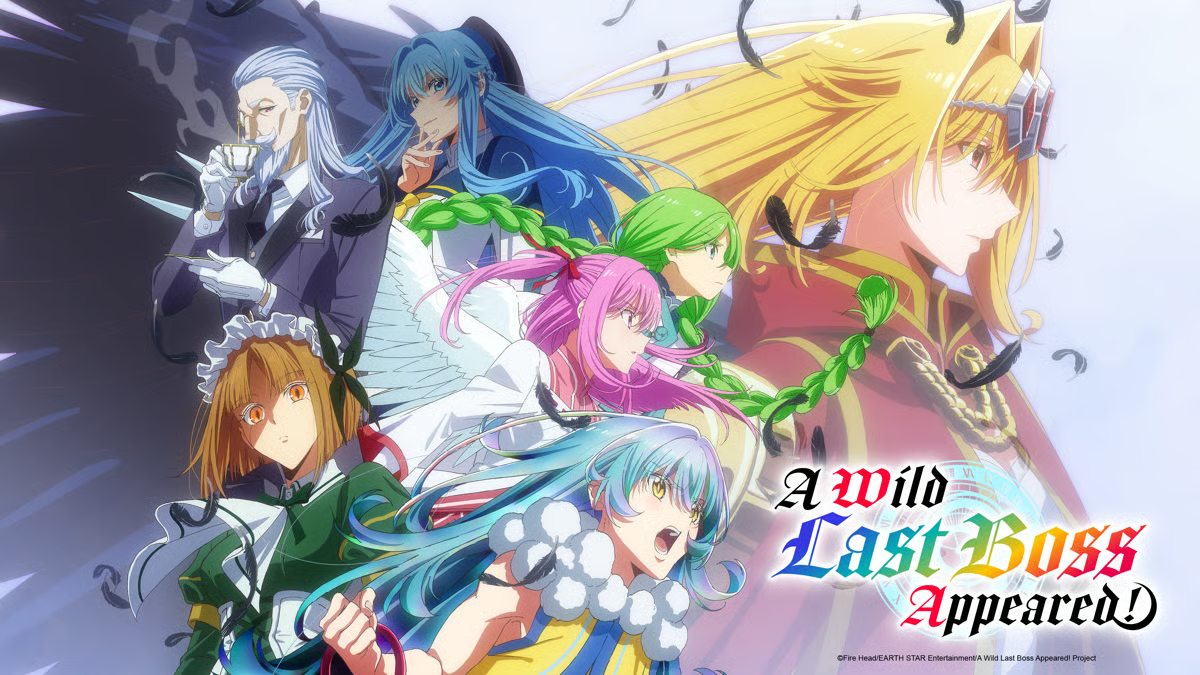
A Wild Last Boss Appeared
When I picked A Wild Last Boss Appeared! to feature on my recurring podcast segment “Isekai Check-In,” I fully expected it to be the most head-empty one yet. Not the worst, mind you- I expect we’ll never dethrone the high school girl hiring Blackwater to shoot anyone who interferes with her sociopathic exploitation of a fantasy world to extract all their wealth for herself. But the title and premise “I reincarnated as Sephiroth, and I’m just the coolest,” a grade school daydream rather than a real story pitch.”
And while not that juvenile, Last Boss is at first content to calmly play the isekai hits. An MMORPG player gets reincarnated as their player character as a reward for being the Best Gamer. Now in the world of the MMO, everyday tasks become a source of comedy as their voice alone is powerful enough to bring kings to their knees. Indulgent, trope-y, tired.
But here and there, signs of a clever author creep in. Our protagonist, a young man, finds themselves with strange feelings now that they’re in the body of an adult woman- but rather than playing it for lechery or even comedy, it’s a source of curious disquiet. The new body is just… different, and the most upsetting part is how unupsetting it is. Our MC encounters players they knew from the game and discovers that these… aren’t the same people they knew. And most of all, memories keep leaking in bit by bit- memories of the character they’re inhabiting, from a life that doesn’t match the backstory their player wrote.
That’s just the tip of the iceberg, or perhaps the spear, as the show’s narrative thrust accelerates, weaving familiar and welcome variants of genre staples with genuinely subversive and ambitious twists. It’s not that “nothing is as it seems,” because that would be tiresome: some people are as straightforward as they seem. But still waters run deep, the suspicious characters are more manipulative than you could imagine, and by the end of the season, our protagonist’s eager delight at their new life has become a plan to take revenge on the forces that isekai’d them.
For all that, it’s only the second biggest surprise of the year. A trashy wish fulfillment isekai proving itself one of the smartest shows of the year may border on miraculous, but a good 3D Sonic game is so staggeringly impossible that I almost don’t believe my own claims.
Everyday Life

The tactile, responsive joy of action games may show its best advantage in hyperbolic situations like swordfights, but for atmosphere, you can’t beat… life. Video games tend to center around the most exciting adventures the protagonist ever experiences, but I honestly prefer games about everyday life to high adventure. There’s plenty of drama and charm in the day to day, and it’s easier for me to connect with as well.
Honorable Mentions
Fantasy Life i: The Girl Who Leapt Through Time: A huge game at its best when it’s small. Fantasy Life i’s efforts to make activities like carpentry, cook, mining, tailoring and more mechanically satisfying instead of just minigames? Great! Its big time travel plot? Ehhhh….
Fields of Mistria: Like Stardew Valley before it, Fields of Mistria is more interested in packing everything good about the farming genre into one game than offering big strides forward. The character writing is exceptional enough to almost qualify, though- it really stands out and makes the game charming.
Story of Seasons: Grand Bazaar: Unlike Fields of Mistria, Grand Bazaar actually does try to figure out what the future of farming games could be- and comes up with a very compelling answer. It stumbles a bit with other elements along the way, but the bazaar itself is an exciting vision for what the genre could become.
My Favorite
The Friends of Ringo Ishikawa
My game of the year was going to fit strangely into any theme I tried to match it with, but The Friends of Ringo Ishikawa was gonna be on this list somewhere, and this isn’t the worst spot. It is a game about everyday mundanity: boredom, errands, chores. Passing the time, productively or pointlessly, while the game stares on with no opinion on your choices, and the calendar winds toward a finale. The sense of emptiness, the attempts to fill it, the days you simply accept it… Ringo feels more like real life than any other game I’ve ever played. And Ringo, like life, is ultimately sad. The emptiness wins, most days.
That’s part of why learning that little bit extra about the protagonist Ringo Ishikawa’s fate in the spiritual sequel Fading Afternoon meant so much to me. Ringo ends his game by choosing his own destruction over betraying his principles. It’s a hell of a bummer. And learning in Fading Afternoon that he survives the choice… that he wins, even if it’s a bitter win, meant a lot to me. Life is hard. We struggle. We suffer. Sometimes we hit rock bottom, or near enough.
And then we keep going. For all that pain, there’s a lot special we’ve experienced already, and more waiting. I don’t know if it’s “worth it.” That math’s too complicated and loaded. But choosing to keep walking is the right choice. I know that.
2026 is gonna be different, if for no other reason than our decision to not cover any triple A games released this year. We want to give more of our attention to indies, to our backlogs, and to the games that we missed out on in years past. I never feel good giving a bunch of attention to the blockbuster games of Square Enix, Nintendo, or Bandai Namco, but I also worry about how we’ll find common ground and games that delight us without them. But I suppose looking at this list, maybe it won’t be as big a departure as I feared.